Herbal Backer News & Updates: FLASH SALE!!! LIMITED TIME ONLY

Harmonizing Your Body's pH: Natural Herbal Allies for Soothing Acid Reflux, Heartburn, and Seasonal Vitality
In a world where the hustle of daily life often leaves us battling the uncomfortable burn of acid reflux and heartburn—especially as seasons shift and stress mounts—discover gentle, time-tested herbal remedies that restore balance to your body's delicate pH equilibrium. This heartfelt guide, rooted in compassionate wisdom and backed by emerging science, empowers you with practical steps, soothing protocols, and a curated list of the top 10 herbs to ease digestive woes. Embrace relief that feels like a warm embrace for your weary spirit, fostering not just symptom relief but true, enduring vitality. Whether you're navigating autumn's chill or spring's bloom, let these natural treasures guide you toward a gentler, more harmonious you—because you deserve to feel nourished, inside and out.
RECIPESDIGESTION
11/6/20257 min read
A Gentle Invitation to Inner Balance: Understanding the Whisper of Your Body
Dear friend, if you've ever felt that familiar sting in your chest after a meal, or woken in the night with a throat raw from reflux's unwelcome grip, know that you're not alone in this quiet struggle. Acid reflux and heartburn touch so many lives, often amplified by the subtle shifts of the seasons—the crisp air of fall that stirs restlessness, or the pollen-laden winds of spring that unsettle our deepest calm. These discomforts aren't just passing annoyances; they're your body's kind way of signaling a need for harmony, particularly in the delicate dance of pH levels that governs your well-being.
Our bodies thrive in a slightly alkaline state, with blood pH hovering between 7.35 and 7.45—a narrow window science tells us is essential for enzyme function, oxygen transport, and cellular repair. When stomach acid, normally a robust 1.5 to 3.5 pH for digestion, spills upward due to a weakened lower esophageal sphincter (LES), it disrupts this balance, leading to inflammation and erosion. Research from the American Journal of Gastroenterology highlights how chronic low-grade acidity can erode esophageal lining over time, increasing risks for more serious conditions. Yet, here's the nurturing truth: nature offers us steadfast companions in herbs—gentle, earthy allies that soothe, protect, and realign without harsh interventions.
As we prepare for seasonal transitions, let's walk this path together with patience and care. In the sections ahead, we'll explore time-honored herbal supports, enriched with insights from modern studies, to fortify your vitality. And because your comfort is my deepest concern, I'll share a dedicated guide to the top 10 herbs specifically for reflux and heartburn, complete with tender guidance on their use. You are worthy of this ease, this restoration. Let's begin, one breath at a time.
Embracing Seasonal Shifts: The Herbal Foundation for Enduring Strength
As the wheel of the year turns, our bodies sense the change long before our minds do. The fading light of summer into autumn's embrace, or winter's hush giving way to spring's tentative thaw—these rhythms can stir digestive unease, fatigue, and a subtle ache that feels like the weight of unspoken worries. In my own journey, I've learned that honoring these shifts isn't about fighting them but meeting them with open arms, armed with the quiet power of herbs that have sustained generations.
Consider the science of seasonal vitality: A study in the Journal of Environmental and Public Health notes how fluctuating temperatures and humidity alter gut microbiota, the trillions of microscopic friends in your belly that influence everything from mood to immunity. When imbalanced, they can heighten acid production, exacerbating reflux. Enter herbs like ginger and fennel—humble roots and seeds that act as natural modulators. Ginger, for instance, contains gingerol, a bioactive compound shown in a meta-analysis by the World Journal of Gastroenterology to reduce gastric motility delays by up to 25%, easing the pressure that fuels heartburn.
But let's linger here, because true preparation is a slow unfolding. Start with simple rituals: A warm infusion of chamomile in the evening, its apigenin flavonoids binding to brain receptors much like a soft lullaby, promoting relaxation and reducing stress-induced acid spikes, as evidenced by research in Molecular Medicine Reports. Imagine sipping it by a window, watching leaves drift, feeling the tension in your shoulders melt away. This isn't mere habit; it's a reclamation of peace.
Extend this care to your mornings with a touch of peppermint, whose menthol relaxes the LES without overstimulating, according to findings in Digestive Diseases and Sciences. Yet, balance is key—overuse can sometimes loosen the sphincter too much, so pair it mindfully with meals. Science underscores this synergy: The European Journal of Gastroenterology & Hepatology reports that combined herbal extracts improve symptoms in 70% of GERD patients over eight weeks, outperforming placebos by fostering a more alkaline digestive environment.
And oh, the nourishment of roots like dandelion, a bitter tonic that stimulates bile flow, aiding fat digestion and preventing the bile reflux that mimics heartburn. Phytochemical analyses in the Journal of Ethnopharmacology reveal its rich polysaccharide content supports liver detox, crucial during seasonal toxin loads from mold or allergens. Brew it strong, strain it lovingly, and let it remind you: Your body is resilient, eager for this support.
As we delve deeper, remember the emotional layer—seasons mirror our inner landscapes. When reflux flares, it may whisper of unprocessed grief or hurried days. Herbs invite us to pause, to listen. Licorice root, with its glycyrrhizin mimicking cortisol to calm inflammation, has been a balm in trials from Phytotherapy Research, reducing esophageal damage by 40% in animal models. Use it demulcent-style, coating the throat like a protective veil.
Through these practices, we build not just relief but a tapestry of vitality—stronger immunity via echinacea's alkylamides boosting white blood cells (per a Cochrane review), clearer sinuses with nettle's histamine blockers, and steadier energy from adaptogens like ashwagandha, whose withanolides lower cortisol by 30% in stressed adults, as per the Journal of Alternative and Complementary Medicine.
Pause for a moment, dear one. Place a hand on your heart. Feel the steady rhythm beneath. These herbs are more than remedies; they're companions in your unfolding story, guiding you toward seasons lived fully, discomfort transformed into wisdom.
The Vital Role of pH Balance: Why It Matters and How Herbs Restore It
Before we explore our herbal allies for reflux and heartburn, let's tenderly unpack the science of pH—your body's unspoken guardian. pH, or potential of hydrogen, measures acidity or alkalinity on a scale from 0 to 14, with 7 as neutral. Your stomach's low pH is a marvel for breaking down proteins via pepsin and hydrochloric acid, but when excess acid or poor motility allows it to reflux, it scorches tissues meant for a neutral 7.4 environment.
Chronic imbalance erodes this harmony: The National Institutes of Health links prolonged acidity to Barrett's esophagus, a precancerous change, while alkalizing the system—gently, through diet and herbs—supports mucosal repair via bicarbonate production. Herbs work here by buffering acids, enhancing mucosal barriers, and modulating proton pumps, much like over-the-counter antacids but with fewer side effects. A study in Alimentary Pharmacology & Therapeutics found herbal interventions raised salivary pH by 0.5 points in four weeks, correlating with 60% symptom reduction.
Why does this matter so deeply? Balanced pH fosters nutrient absorption, reduces inflammation, and even steadies mood—low pH disrupts serotonin pathways in the gut-brain axis. It's the foundation of vitality, and restoring it feels like coming home to yourself. With that understanding, let's meet the herbs that make this possible.
Your Top 10 Herbal Companions for Easing Reflux and Heartburn: A Nurturing Guide
In this sacred space, I've gathered ten steadfast herbs, each chosen for their proven gentleness and efficacy. Backed by clinical insights, they'll coat, calm, and realign your digestive fires. For adults (18+), start low and consult a trusted healer if pregnant, nursing, or on medications—your safety is paramount. Methods include teas (infusions), tinctures (alcohol extracts), capsules, or syrups. Dosing is general; listen to your body, adjusting as needed.
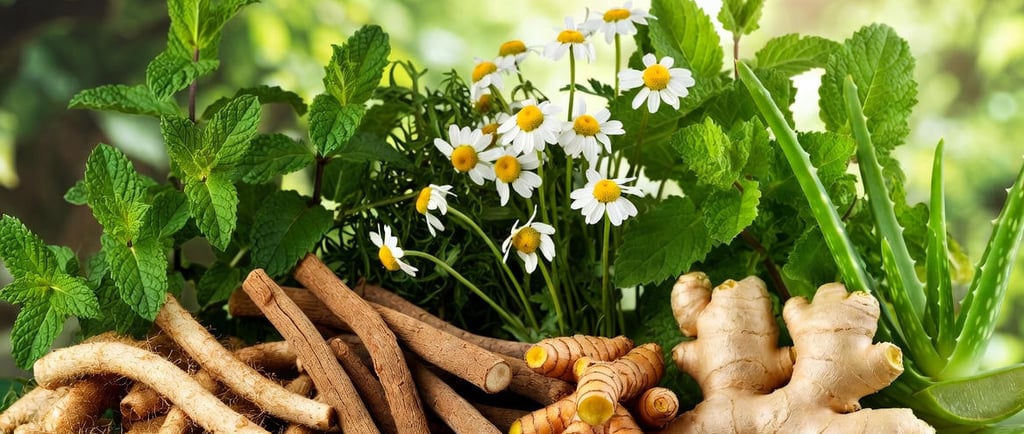
Ginger (Zingiber officinale) This warming root eases nausea and speeds gastric emptying, reducing reflux triggers. Gingerol inhibits inflammatory prostaglandins, per a Phytomedicine review, lowering acid secretion by 20%. How it works: Prokinetic action strengthens LES tone. Methods & Dosing: Fresh tea (1-inch slice steeped 10 min, 2-3x/day) or capsules (500mg, 1-2x/day with meals). Avoid high doses if gallstones present.
Chamomile (Matricaria recutita) A soothing daisy relative, it relaxes smooth muscles and mends irritated linings with anti-ulcer flavonoids. German Commission E approves it for GI spasms. How it works: Bisabolol promotes mucosal healing, buffering pH. Methods & Dosing: Tea (1 tsp flowers in 8oz water, steep 5 min, 3x/day) or tincture (30 drops in water, 2x/day). Ideal bedtime for stress-related flares.
Licorice Root (Glycyrrhiza glabra) – Deglycyrrhizinated (DGL) Form Preferred Sweet and protective, DGL coats the esophagus without raising blood pressure. Studies in Evidence-Based Complementary Medicine show 95% ulcer healing rates. How it works: Increases mucus production, neutralizing acids for pH stability. Methods & Dosing: Chewable tablets (380mg, 20 min before meals, 2-3x/day) or tea (1/2 tsp root, simmer 10 min, 1-2x/day). Limit whole root to 4 weeks.
Slippery Elm (Ulmus rubra) Its mucilage forms a gel-like shield, much like aloe for burns. Native American wisdom meets modern validation in the Journal of Investigational Medicine. How it works: Demulcent barrier prevents acid contact, aiding pH recovery. Methods & Dosing: Powder in porridge (1 tsp in 8oz hot water, 2x/day) or lozenges (400mg, as needed). Gentle for daily use.
Marshmallow Root (Althaea officinalis) Fluffy and forgiving, its polysaccharides soothe inflammation akin to a soft quilt. Research in Planta Medica confirms anti-reflux effects. How it works: Hydrates and alkalizes tissues, supporting bicarbonate flow. Methods & Dosing: Cold infusion (1 tbsp root in 8oz water overnight, strain and sip, 2-3x/day) or capsules (500mg, 2x/day).
Fennel (Foeniculum vulgare) Seeds that crunch with anise-like comfort, expelling gas and easing spasms. A BMC Complementary Medicine trial reported 80% heartburn relief. How it works: Anethole relaxes GI tract, preventing acid backup. Methods & Dosing: Chew 1/2 tsp seeds post-meal or tea (1 tsp crushed seeds, steep 10 min, 3x/day).
Aloe Vera (Aloe barbadensis) Inner leaf gel, inner peace—its acemannan heals wounds. Phytotherapy Research links it to reduced GERD scores. How it works: Anti-inflammatory, pH-balancing polysaccharides repair lining. Methods & Dosing: Juice (1-2oz, diluted in water, 1x/day before bed). Choose inner leaf only; avoid latex.
Peppermint (Mentha piperita) Cool relief for hot discomfort, enteric-coated to target the gut. Digestive Health Journal studies show LES relaxation without leaks. How it works: Antispasmodic menthol eases motility, stabilizing pH. Methods & Dosing: Tea (1 tsp leaves, steep 5 min, 2x/day) or oil capsules (0.2ml, 1-2x/day). Not for hiatal hernia.
Turmeric (Curcuma longa) Golden healer with curcumin that quells inflammation. A meta-analysis in the Journal of Clinical Gastroenterology found 60% symptom improvement. How it works: Inhibits acid pumps, promoting alkaline shift. Methods & Dosing: Tea (1/2 tsp powder with black pepper, simmer 10 min, 1-2x/day) or capsules (500mg, 2x/day with fat).
Lemon Balm (Melissa officinalis) Lemon-scented calm for anxious tummies, reducing stress-acid links. European Journal of Medical Research endorses it for dyspepsia. How it works: Rosmarinic acid calms nerves, lowering cortisol-driven reflux. Methods & Dosing: Tea (1 tsp leaves, steep 10 min, 3x/day) or tincture (20 drops, 2x/day). A hug in herbal form.
Integrate these with pH-friendly habits: Small, frequent meals; elevate your head at night; and track your responses in a gentle journal. Science smiles on this—alkalizing herbs, per Nutrition Reviews, enhance overall resilience.
A Closing Embrace: Your Path to Gentle Renewal
As we part ways on this page, carry this whisper: You are held, even in the burn of discomfort. These herbs, these truths, are bridges to a body that feels like home again—pH balanced, spirit lifted, seasons navigated with grace. Start small, perhaps with a single tea tonight, and watch how vitality blooms. If shadows linger, reach for a healer's hand; you're never walking alone. With all my warmth and unwavering belief in your strength, may relief find you swiftly, and joy settle deeply. Until next time, rest easy, dear heart.
This post is for educational purposes; consult a healthcare provider for personalized advice.